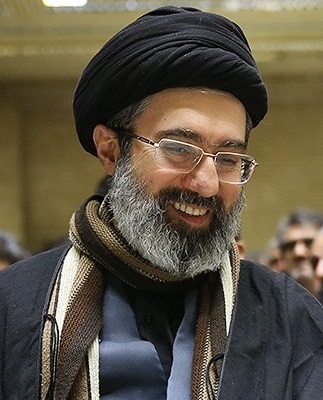
Unveiling Mojtaba Khamenei: A Son's Shadow in Iranian Politics
Mojtaba Khamenei, son of Iran's current Supreme Leader, Ali Khamenei, occupies a uniquely influential yet often opaque position within the Islamic Republic's power structure. While not holding a formal public office of the highest order, his role has been significant, particularly within the inner workings of his father's office. For years, he has been considered a potential successor to the paramount leadership, a prospect that has both captivated and concerned observers of Iranian politics. However, the dynamics surrounding his potential ascension have grown increasingly complex, especially in the wake of significant anti-government protests that swept Iran in 2022. Understanding Mojtaba Khamenei requires delving into his lineage, his behind-the-scenes influence, and the intricate web of clerical and political power that defines Iran.
Early Life and Clerical Roots in a Revolutionary Era
Mojtaba Khamenei was born into a prominent clerical family in Mashhad, Iran, a city of immense religious significance for the Twelver Shi'ah. This upbringing placed him squarely within an environment steeped in religious scholarship and political activism, a common thread among the revolutionary generation. His birth coincided with a period of profound socioeconomic upheaval in Iran. The reform programs initiated by Mohammad Reza Shah Pahlavi, most notably the sweeping land reforms of the 1960s and the subsequent "White Revolution," dramatically reshaped Iranian society. While intended to modernize the nation, these reforms often alienated significant segments of the clerical elite, who saw their traditional influence and economic bases challenged.
It was against this backdrop of modernization efforts and simmering discontent that Mojtaba’s father, Ali Khamenei, emerged as a young activist. Ali Khamenei was among those who vehemently opposed the Shah's policies and actively supported efforts to overthrow the monarchy during the 1970s. Following the triumphant Iranian Revolution in 1979, Ali Khamenei rapidly ascended through the ranks of the new Islamic Republic, ultimately becoming its second Supreme Leader (rahbar). This rich family history, deeply interwoven with the very fabric of revolutionary Iran, provided Mojtaba Khamenei with an unparalleled foundation of both religious legitimacy and political lineage. While specifics of Mojtaba's early education are less public, his background within a clerical family in Mashhad strongly suggests a formative education rooted in Islamic jurisprudence and theological studies, preparing him for a life within Iran's unique system of religious governance.
Power Behind the Scenes: Mojtaba's Influence in the Supreme Leader's Office
Unlike many high-profile figures in Iranian politics, Mojtaba Khamenei has largely operated outside the glare of public scrutiny, yet his influence is widely acknowledged to be substantial. Within the Office of the Supreme Leader, he has played what sources describe as a "commanding role." This suggests significant operational authority and direct involvement in the day-to-day decisions and strategic directives emanating from the highest office in Iran.
His power is often described as stemming from his direct access to his father and his involvement in critical decision-making processes, ranging from security matters to economic policies. This 'behind-the-scenes' influence is characteristic of many powerful figures in autocratic or semi-autocratic systems, where informal power structures can often eclipse formal ones. Mojtaba's position allows him to shape policy, personnel decisions, and even the direction of certain powerful institutions without needing to hold a specific cabinet position or face direct public accountability. This level of influence makes him a critical node in understanding the inner workings of the Islamic Republic, even if his public profile remains understated. For more detailed insights into this unique dynamic, consider exploring
Mojtaba Khamenei's Influence: Inside Iran's Supreme Leader's Office. His ability to operate effectively outside the public view underscores a deep understanding of the Iranian political landscape and a mastery of the intricate power plays that define it.
Public Profile and the Question of Mojtaba Khamenei's Gesundheit
When discussing figures of Mojtaba Khamenei's stature, especially those considered potential successors to supreme leadership, a variety of factors come into play for both domestic and international observers. Among these, the leader's health, or "gesundheit" in German, often becomes a critical point of interest. A leader's physical and mental well-being can directly impact their decision-making capacity, longevity in power, and the overall stability of the political system they govern.
However, regarding **Mojtaba Khamenei's gesundheit**, publicly available information is notably scarce. Official Iranian media or international news outlets extensively covering his biography and political influence have not provided details regarding his specific health status. This lack of transparency is not uncommon for high-ranking officials in many opaque political systems, where personal health information is often guarded as a state secret to maintain an image of strength and stability.
The absence of public data on Mojtaba Khamenei's health means that any discussion of his physical condition would be purely speculative and unsupported by factual evidence. This contrasts with some other political figures whose health records might be selectively released or become subjects of public debate due to noticeable public appearances or official statements. For Iran, where the Supreme Leader holds ultimate authority and his succession is a matter of paramount national importance, the health of any potential successor would naturally be of immense strategic interest to various factions within the regime, as well as to foreign powers. Despite this inherent relevance, public information regarding **Mojtaba Khamenei's gesundheit** simply does not exist in the public domain, leaving this aspect of his profile shrouded in privacy.
The Shifting Sands of Succession: Prospects and Challenges
For many years, Mojtaba Khamenei was consistently cited as a leading candidate to succeed his aging father as Iran's Supreme Leader. His deep familial connection, commanding role within the Supreme Leader's office, and alleged loyalty from powerful institutions like the Islamic Revolutionary Guard Corps (IRGC) bolstered these predictions. The succession process in Iran is complex, involving the Assembly of Experts, a body of 88 high-ranking clerics, who are constitutionally tasked with choosing the next leader based on specific criteria, including religious scholarship and political acumen.
However, the political landscape around Mojtaba's succession prospects has seen significant shifts. The widespread anti-government protests that erupted in Iran in 2022 appear to have diminished the likelihood of his direct succession. The public discontent highlighted during these protests, coupled with a broader desire for change among certain segments of Iranian society, has made the prospect of a dynastic transfer of power from father to son less politically palatable. Many analysts suggest that such a move could exacerbate public anger and potentially destabilize the regime further.
The complexities of succession extend beyond just popular opinion. The intricate power struggles among various clerical factions, political elites, and security forces also play a crucial role. While Mojtaba undoubtedly possesses a strong base of support, the consensus required for the Assembly of Experts to elect a new Supreme Leader is not easily achieved. Other high-ranking clerics and political figures are also considered potential contenders, making the process highly unpredictable. The post-2022 environment demands a leader who can navigate both internal challenges and external pressures, potentially favoring a candidate perceived as more unifying or less controversial. To understand the evolving discussions and challenges surrounding this crucial issue, refer to
Mojtaba Khamenei: Iran's Succession Hopes After 2022 Protests.
Analyzing Mojtaba Khamenei's Political Stature
Mojtaba Khamenei embodies a unique blend of religious lineage, clandestine power, and political ambition within Iran's Islamic Republic. His entire life has unfolded within the shadow of his father's supreme authority, granting him unparalleled access and insight into the highest echelons of Iranian governance. This direct exposure to the mechanisms of power has undoubtedly shaped his political acumen, allowing him to navigate the intricate and often perilous landscape of Iranian politics from a young age.
His stature is not merely a reflection of his familial ties but also a testament to his demonstrated ability to exert influence without a public portfolio. This makes him a significant player regardless of whether he ultimately becomes the next Supreme Leader. He represents a segment of the clerical establishment that is deeply entrenched in the current system, prioritizing its continuity and stability. His role offers a fascinating case study in how power is accumulated and wielded in an opaque religious-political state. The future implications of his influence, whether as a potential successor or a powerful figure behind the scenes, remain pivotal for understanding the trajectory of Iran.
Conclusion
Mojtaba Khamenei remains an enigmatic and profoundly influential figure in Iranian politics. Born into a powerful clerical family in a revolutionary era, his journey has been deeply intertwined with the Islamic Republic's destiny. His "commanding role" within the Office of the Supreme Leader highlights a significant behind-the-scenes influence, shaping decisions and policies from a position largely removed from public view. While once a frontrunner for succession, the shifting political landscape, particularly after the 2022 protests, has complicated his path to the ultimate leadership. Despite intense scrutiny and interest in every aspect of potential leaders, public information regarding **Mojtaba Khamenei's gesundheit** remains unavailable, a common characteristic for high-ranking figures in such political systems. His continued presence and undeniable sway mean that understanding Mojtaba Khamenei is crucial for anyone seeking to grasp the complex dynamics of power and succession within contemporary Iran.