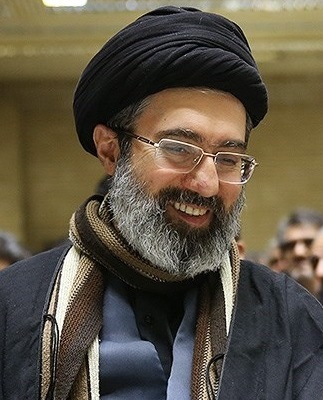
Mojtaba Khamenei's Ascent: From Clerical Roots to Shadow Power
Mojtaba Khamenei, often described as an enigmatic figure operating behind the scenes of Iran's powerful clerical establishment, has long been a subject of intense speculation regarding the future leadership of the Islamic Republic. As the son of Iran's current Supreme Leader, Ali Khamenei, his trajectory has been intrinsically linked to the revolution and the intricate power dynamics that define modern Iran. While his public profile remains remarkably low, his influence within the Office of the Supreme Leader is widely recognized as commanding, raising questions about his potential succession—a likelihood that has seen significant shifts, particularly following the antigovernment protests that swept Iran in 2022.
A Family Legacy in Revolutionary Iran
Born into a prominent clerical family in Mashhad, a city holding immense religious significance for the Twelver Shiʿah, Mojtaba Khamenei's formative years coincided with a period of profound socioeconomic upheaval in Iran. The reform programs initiated by Mohammad Reza Shah Pahlavi, including the impactful land reforms of the 1960s and the subsequent White Revolution, stirred discontent among the clerical elite. It was within this politically charged atmosphere that his father, Ali Khamenei, emerged as a young, influential activist, deeply involved in the efforts to overthrow the Shah in the 1970s. With the triumph of the Iranian Revolution and the establishment of the Islamic Republic in 1979, Ali Khamenei rose to prominence, eventually becoming the nation's second (and current) Supreme Leader.
Growing up under the shadow of a father who was not only a revolutionary leader but also a pivotal figure in shaping the new Islamic state, Mojtaba was immersed in the intricacies of Iranian politics and religious authority from an early age. This unique upbringing provided him with an unparalleled vantage point into the workings of power, preparing him for a role that, though largely unseen, would become central to the operation of the Supreme Leader's Office.
The Architect Behind the Veil: Influence in the Supreme Leader's Office
Unlike his father, who assumed highly visible roles as President and then Supreme Leader, Mojtaba Khamenei has meticulously maintained a low public profile. Yet, within the corridors of power, particularly in the Office of the Supreme Leader, his influence is widely understood to be substantial. He has been described as playing a "commanding role" in this critical institution, operating largely "outside of the public view."
This discreet but potent involvement suggests that Mojtaba acts as a crucial gatekeeper, advisor, and potentially a manager of various key operations linked to the Supreme Leader's directives. His functions may involve overseeing aspects of the security apparatus, managing financial networks associated with the leader's office, and coordinating communications between various factions of the regime. This form of "invisible power" is characteristic of highly centralized, opaque political systems where personal trust and proximity to the ultimate authority often supersede formal titles. His ability to operate effectively from behind the scenes has historically positioned him as a significant figure, not just within the family, but within the broader power structure of the Islamic Republic.
The Enigmatic Figure: Decoding Mojtaba Khamenei's Public Presence and Personal Health
In the highly secretive world of Iranian politics, information about top officials, especially those not holding public elected office, is tightly controlled. This strategic opaqueness extends to personal details, including the health status of key figures.
Understanding the Scarcity of Information on Mojtaba Khamenei's Health (Mojtaba Chamenei Gesundheit)
When searching for details regarding Mojtaba Khamenei's biography, one quickly encounters a significant void concerning his personal health, often referred to as "mojtaba chamenei gesundheit" in queries. Reputable sources, including comprehensive encyclopedic entries and news analyses focusing on his political role, consistently confirm that there is no publicly available, verified information regarding his health status. This absence is not an oversight but rather a characteristic feature of how the Iranian establishment manages information about its most powerful, yet non-public-facing, figures.
Unlike Western political systems where the health of prominent leaders is often subject to public scrutiny, Iran's political landscape operates under a different set of norms. The state tightly controls narratives, and personal details of figures like Mojtaba Khamenei are deemed highly sensitive. Disclosing such information could be seen as weakening an aura of infallibility, inviting unwanted speculation, or potentially being exploited by rivals. Therefore, any search for specific details about his "mojtaba chamenei gesundheit" will likely yield no concrete facts, underscoring the deliberate strategic silence surrounding the inner circle of the Supreme Leader.
The Strategic Silence Surrounding Iran's Leadership
The lack of transparency regarding Mojtaba Khamenei's health is part of a broader strategy employed by the Iranian regime to protect its leaders and maintain stability. This strategic silence aims to:
- Control the Narrative: By withholding information, the regime prevents the spread of rumors and speculation that could undermine authority or create instability.
- Enhance Mystique: An air of mystery around powerful figures can sometimes enhance their perceived strength and authority, making them seem above common frailties.
- Ensure Security: Details about a leader's health could potentially be exploited by internal or external adversaries.
- Project Unity: Any signs of weakness or internal discord, which health issues might suggest, are carefully suppressed to project an image of unwavering unity and strength.
This deliberate obscurity poses a challenge for analysts and the public alike, forcing reliance on indirect indicators and informed speculation when trying to understand the full picture of Iran's leadership dynamics.
Succession in Focus: Mojtaba Khamenei's Prospects After the 2022 Protests
The question of who will succeed Ali Khamenei, Iran's ailing 85-year-old Supreme Leader, is arguably the most critical and sensitive political issue facing the Islamic Republic. Mojtaba Khamenei has long been a key contender, but the tumultuous events of 2022 have significantly altered the landscape of succession.
Pre-2022: A Contender in the Shadows
Before the widespread antigovernment protests of 2022, Mojtaba Khamenei was frequently cited as a potential successor to his father. His proximity to the current Supreme Leader, his deep understanding of the inner workings of the regime, and his reported command over key levers of power—including factions within the Revolutionary Guard and financial networks—made him a formidable, albeit discreet, candidate. He embodied a certain continuity, possessing the trust of the establishment and the necessary clerical credentials, even if he lacked a broad public following or a history of overt political maneuvering.
His potential ascent was seen by some as a way to ensure the continuity of the current leader's policies and to maintain stability within the conservative establishment. His role as a trusted confidant and gatekeeper suggested he was being groomed, or at least positioned, for a higher calling when the time came.
The Turning Point: Impact of the 2022 Antigovernment Protests
The nationwide antigovernment protests that erupted in Iran in 2022, sparked by the death of Mahsa Amini, marked a critical turning point for Mojtaba Khamenei's succession prospects. While he was once "sometimes considered a potential successor," the likelihood of his ascension has "generally declined since the antigovernment protests in 2022." This shift can be attributed to several factors:
- Public Sentiment and Legitimacy: The protests revealed deep-seated public dissatisfaction with the ruling establishment. A succession that appeared to be hereditary—from father to son—would likely be perceived as an illegitimate power grab and a violation of revolutionary principles, potentially igniting further widespread unrest and undermining the legitimacy of the entire system.
- Need for a Unifying Figure: In the wake of such profound societal divisions, the next Supreme Leader will need to be a figure who can garner broad consensus, both among the clerical elite and potentially with a segment of the disaffected populace. A figure perceived as part of a dynastic succession might further alienate significant portions of society.
- Challenges to Stability: The regime prioritizes stability above all else. Installing a leader who could be a lightning rod for renewed protests would be seen as a significant risk to the integrity of the Islamic Republic.
- Assembly of Experts' Role: The Assembly of Experts, the clerical body constitutionally tasked with selecting the next Supreme Leader, faces immense pressure. Their decision will reflect not just internal clerical politics but also an awareness of the nation's fragile social fabric. They may lean towards a candidate with broader appeal or a less controversial profile to ensure a smoother transition.
Therefore, while Mojtaba's behind-the-scenes influence remains considerable, the optics of a father-to-son succession have become politically toxic in the current climate, making it a less viable option for maintaining long-term stability.
Navigating Iran's Future: Challenges for the Next Supreme Leader
The individual who eventually assumes the mantle of Supreme Leader will face an array of daunting challenges, both domestically and internationally. The 2022 protests underscored the fragility of social cohesion and the depth of public discontent, setting a high bar for the next leader's ability to govern effectively.
The Weight of Domestic and International Expectations
The next Supreme Leader will inherit a nation grappling with persistent economic woes, significant social unrest, and complex regional and international relations. They will need to:
- Restore Economic Stability: Addressing inflation, unemployment, and corruption will be paramount to appeasing a frustrated populace.
- Manage Social Discontent: Finding a way to address the grievances expressed during the protests without undermining the fundamental principles of the Islamic Republic will be a delicate balancing act.
- Navigate Geopolitical Tensions: Iran's relationship with the West, its nuclear program, and its regional proxy conflicts will demand a leader with shrewd diplomatic and strategic capabilities.
The selection process, while ultimately secretive, will likely prioritize a candidate who possesses strong religious legitimacy, undeniable loyalty to the revolution's ideals, and the political acumen to steer the country through turbulent waters. Observing statements from key clerical figures, analyzing shifts in state media narratives, and understanding the evolving dynamics within the Revolutionary Guard and the Assembly of Experts will offer vital clues into who might be considered a viable successor.
In conclusion, Mojtaba Khamenei's role in Iran's political landscape is undeniably significant, characterized by a powerful yet discreet presence within the Supreme Leader's Office. While once seen as a leading contender for succession, the profound societal upheaval triggered by the 2022 protests has significantly diminished the political viability of a perceived dynastic transfer of power. The deliberate lack of public information surrounding his personal life, including his health (mojtaba chamenei gesundheit), is a testament to the regime's strategy of controlling narratives and maintaining an aura of authority. As Iran looks towards a post-Ali Khamenei era, the selection of the next Supreme Leader will be a pivotal moment, shaping the future of a nation grappling with immense domestic and international pressures, with the need for a broadly legitimate and unifying figure taking precedence over private influence.