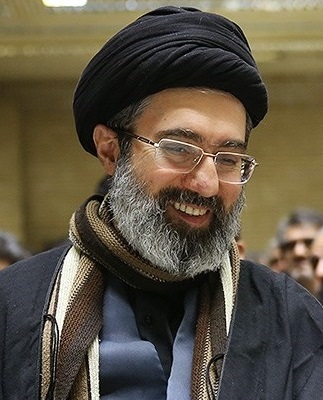
Unpacking Mojtaba Khamenei's Influence in Iran's Power Corridors
In the intricate tapestry of Iranian politics, few figures wield as much behind-the-scenes power as Mojtaba Khamenei, the son of the Islamic Republic's Supreme Leader, Ayatollah Ali Khamenei. While largely remaining out of the public spotlight, his influence within the Office of the Supreme Leader is widely acknowledged, making him a subject of intense scrutiny and speculation. One question that frequently emerges in public discourse, particularly online, pertains to mojtaba chamenei gesundheit, or the health of Mojtaba Khamenei. However, for a figure operating in the highest echelons of a state known for its opacity, personal details like health status are rarely, if ever, disclosed, making it a topic where public information is scarce.
Despite the lack of public details regarding his health, Mojtaba Khamenei's trajectory and role offer a critical lens through which to understand the dynamics of power, succession, and political maneuvering in Iran. His journey from a clerical family in the significant religious center of Mashhad to a commanding position within the Supreme Leader's Office underscores a profound connection to the heart of the Islamic Republic's establishment.
The Enigmatic Figure: Mojtaba Khamenei's Rise and Role
Mojtaba Khamenei was born into a family deeply embedded in Iran's clerical traditions in Mashhad, a city revered by Twelver Shi'ah. This upbringing provided him with an early immersion in religious scholarship and the socio-political currents that defined pre-revolutionary Iran. His father, Ali Khamenei, was a pivotal figure in the movement to overthrow the Shah in the 1970s and subsequently rose to immense influence in the Islamic Republic established in 1979, eventually becoming its second Supreme Leader.
Growing up under the shadow of his father's burgeoning political and religious authority, Mojtaba cultivated a unique position within the Iranian establishment. Rather than pursuing a public political career, he opted for a role primarily within the Office of the Supreme Leader (Beyt-e Rahbari). Here, out of the glare of public scrutiny, he has played what many describe as a commanding role. This involves a range of responsibilities that likely include:
- Gatekeeping: Controlling access to the Supreme Leader, filtering information, and managing appointments.
- Advisory Capacity: Providing counsel to his father on critical domestic and foreign policy matters.
- Political Coordination: Liaising between various factions, institutions, and influential figures within the Iranian power structure, including the Revolutionary Guard Corps (IRGC) and the judiciary.
- Oversight: Potentially having indirect influence over key security and intelligence dossiers, given the close proximity to the ultimate decision-maker.
Operating outside a formal, publicly elected or appointed office grants Mojtaba a unique kind of influence – one derived from trust, proximity, and an intimate understanding of the Supreme Leader's perspective and objectives. This allows him to exert significant power without direct public accountability, making him a formidable, albeit largely unseen, force in Iranian politics.
Navigating the Supreme Leader's Office: A Hub of Power and Influence
The Office of the Supreme Leader is far more than a bureaucratic entity; it is the nerve center of power in the Islamic Republic, responsible for guiding the nation's strategic direction, setting policy, and ensuring the ideological purity of the state. Understanding Mojtaba Khamenei's influence requires appreciating the immense weight and authority concentrated within this office.
In this environment, individuals like Mojtaba, who have the Supreme Leader's absolute trust, become indispensable. His role is often likened to a chief of staff, but with far greater political weight and less transparency. He is believed to be a conduit for the Supreme Leader's directives, a trusted advisor, and a key figure in managing the complex web of relationships that define Iranian governance. For anyone seeking to understand the inner workings of Iran, recognizing the significance of this office and the individuals who operate within its non-public corridors is absolutely crucial.
Practical Tip: When analyzing Iranian political moves or statements, it's essential to consider not just public figures but also the hidden hands operating within institutions like the Supreme Leader's Office. Their influence, though subtle, can often be determinative.
Succession Dynamics and Political Currents: Beyond 2022
For many years, Mojtaba Khamenei was frequently cited as a potential successor to his aging father, a prospect that fueled both domestic and international speculation. This consideration stemmed from his deep clerical roots, his father's undeniable trust, and his established network within the powerful echelons of the state, particularly the IRGC and the intelligence apparatus.
However, the landscape of Iranian politics is constantly shifting. The widespread anti-government protests that erupted in 2022, sparked by the death of Mahsa Amini, had a significant impact on succession dynamics. These protests, which saw unprecedented levels of dissent against the clerical establishment, reportedly led to a general decline in the likelihood of Mojtaba Khamenei's succession. The rationale often cited for this shift includes:
- Public Sentiment: A perceived dynastic succession (father to son) might be viewed negatively by a populace increasingly weary of the existing political structure and demanding greater accountability and change.
- Need for Legitimacy: In a post-2022 protest environment, the next Supreme Leader might need to possess a broader base of perceived legitimacy, perhaps from a figure with less direct family ties to the current leadership, to placate popular discontent.
- Factional Rivalries: The protests may have emboldened rival factions within the establishment to push for their own preferred candidates, making a clear path for Mojtaba more difficult.
The process of selecting a new Supreme Leader is complex and opaque, ultimately decided by the Assembly of Experts, a body of high-ranking clerics. However, their choice is heavily influenced by behind-the-scenes maneuvering by powerful factions and key institutions. While Mojtaba Khamenei's deep connections and experience remain significant, the political currents stirred by the 2022 protests have undoubtedly introduced new variables into the succession equation.
For a deeper dive into these complex succession scenarios, you might find Mojtaba Khamenei: Iran's Succession Hopes After 2022 Protests particularly insightful.
The Unseen Aspects: Why "Mojtaba Chamenei Gesundheit" Remains Undisclosed
Returning to the persistent query about mojtaba chamenei gesundheit, it is important to reiterate that specific, verifiable details about Mojtaba Khamenei's health are not publicly available. This lack of information is not unusual for high-ranking, non-public figures in Iran, or indeed in many authoritarian or deeply secretive political systems. There are several strategic reasons why such personal information is meticulously guarded:
- Maintaining an Image of Strength: The health of a powerful figure is often seen as indicative of the stability and strength of the regime itself. Any perceived weakness could invite speculation about leadership transitions or internal vulnerabilities.
- Security Concerns: Publicizing health details could potentially expose vulnerabilities or aid those seeking to destabilize the regime.
- Avoiding Succession Speculation: In a system where the Supreme Leader's succession is a critical, often contentious process, revealing health issues of a potential successor could trigger premature and disruptive political maneuvering.
- Lack of Transparency: The Islamic Republic's political system, particularly at its highest levels, prioritizes control of information. Personal details of key figures are considered state secrets, not public domain.
Practical Tip: When researching influential, non-public figures in Iran, it's more productive to focus on their known actions, connections, and institutional roles rather than seeking personal details like health status, which are almost certainly kept private for strategic reasons. Understanding the system's inherent opacity is key to interpreting available information.
To learn more about his background and influence, consider reading Who is Mojtaba Khamenei? Biography and Leadership Prospects.
Conclusion
Mojtaba Khamenei remains an undeniably influential force within Iran's political landscape, operating from the powerful, yet opaque, Office of the Supreme Leader. His commanding role, deeply rooted in family legacy and a profound understanding of the Islamic Republic's inner workings, positions him as a key figure to watch, irrespective of his declining succession prospects post-2022 protests. While questions regarding mojtaba chamenei gesundheit persist online, the nature of Iranian high-level politics ensures that such personal information remains firmly within the realm of the undisclosed. His true impact lies not in public appearances or personal health updates, but in the unseen directives, strategic counsel, and quiet management that shape the direction of a complex and ever-evolving nation.